%201.png)



Ultimate Robotics / Solutions / Healthcare & Hospitals
Nurses and orderlies who lose hours of a shift walking medications, samples and supplies between wards, workforce pressure that isn't easing on its own, and overnight coverage that stretches thin — this is where an autonomous fleet, assessed and deployed, starts to extend what your clinical and security teams can cover, not replace them.


Capabilities
Most hospital and healthcare operational, workforce and security problems
tend to fall into a handful of recurring shapes:

Every medication run, sample transport or supply delivery is time a nurse or orderly isn't spending with a patient.

Rising care expectations and thin overnight staffing make the repeatable, walking-heavy work harder to sustain.

Maternity wards and pharmacies rely on access control plus whoever happens to be on the floor noticing something's wrong.

Dementia and psych wards carry a genuine elopement risk that a badge system alone doesn't address.

Passive HVAC filtration doesn't respond in real time during flu season or an active infection-control period.

A different setup at every site makes it harder to hold care standards and risk to one benchmark.
Our Robotics Fleet
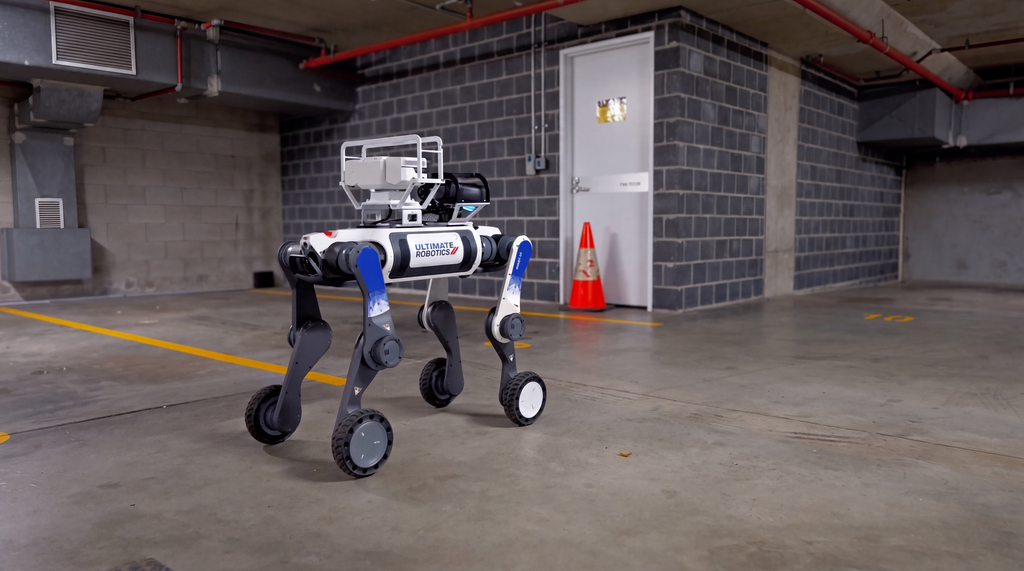
Campus grounds, car parks & perimeter
Our range of outdoor and all-terrain ground robots — quadruped and wheel-leg hybrid platforms built to patrol hospital grounds, car parks, ambulance bays and campus perimeters around the clock. Across the range, DINGO runs from agile units suited to tighter or complex sites through to a flagship platform built for larger campuses and continuous exterior coverage.
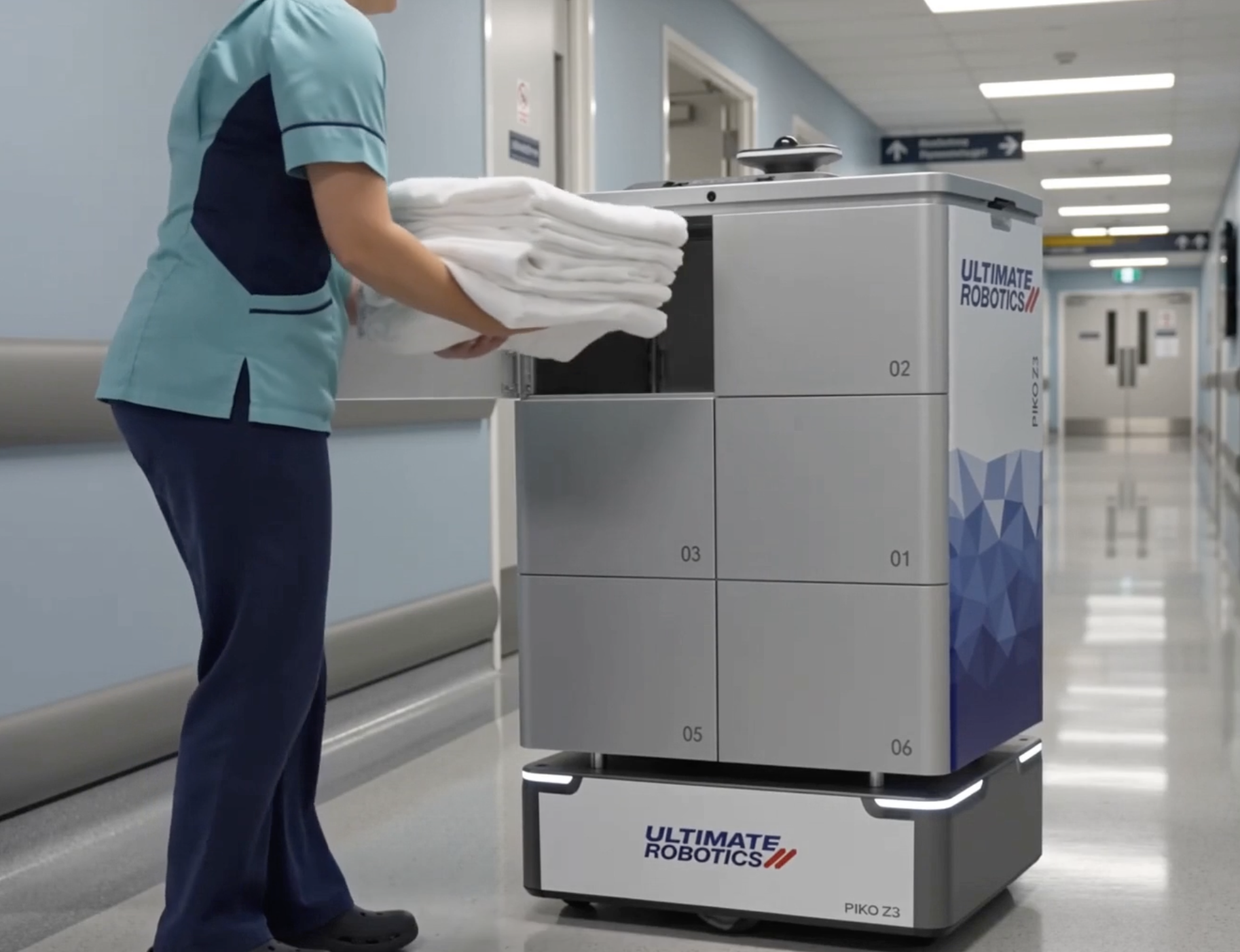
Ward delivery, linen & bulk transport, restricted-area presence, air quality monitoring
Our range of multifunctional autonomous mobile robots (AMRs) — built to move through corridors and wards, running scheduled and on-demand delivery of medications, samples and supplies between pharmacy, wards and pathology, while also holding presence outside restricted areas and flagging a patient outside their designated ward. The range also covers the heavier end of the job — moving linen, bulk stores and other heavy loads between departments in a single run instead of a manual trolley trip, taking the physical lifting out of it as well as the walking. Across the range, PIKO frees clinical staff time for direct patient care — it transports and detects only; medication administration and clinical sign-off stay entirely human.
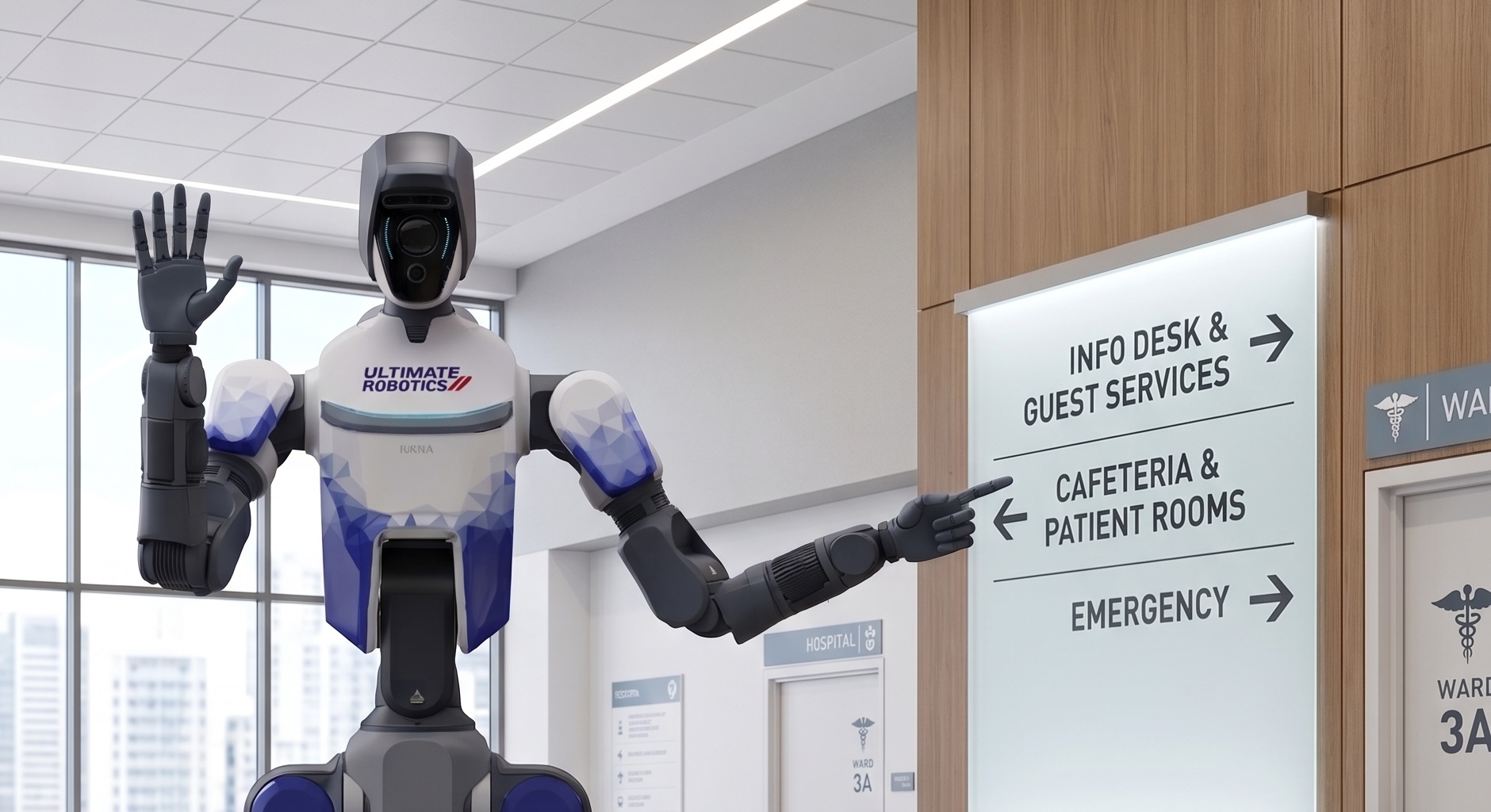
Situational awareness in higher-acuity settings
Our industrial humanoid robot — a bipedal, human-form platform suited to healthcare and aged care settings calling for a higher level of situational awareness and natural interaction than a wheeled or four-legged platform offers. Worth a conversation for hospital sites wanting a visible presence in reception, waiting areas or high-traffic public zones.
Frequently Asked Questions
Can't find what you're looking for? Contact our team to discuss your specific site and compliance requirements.